
Leak detection in Cooper City, before it costs you a floor
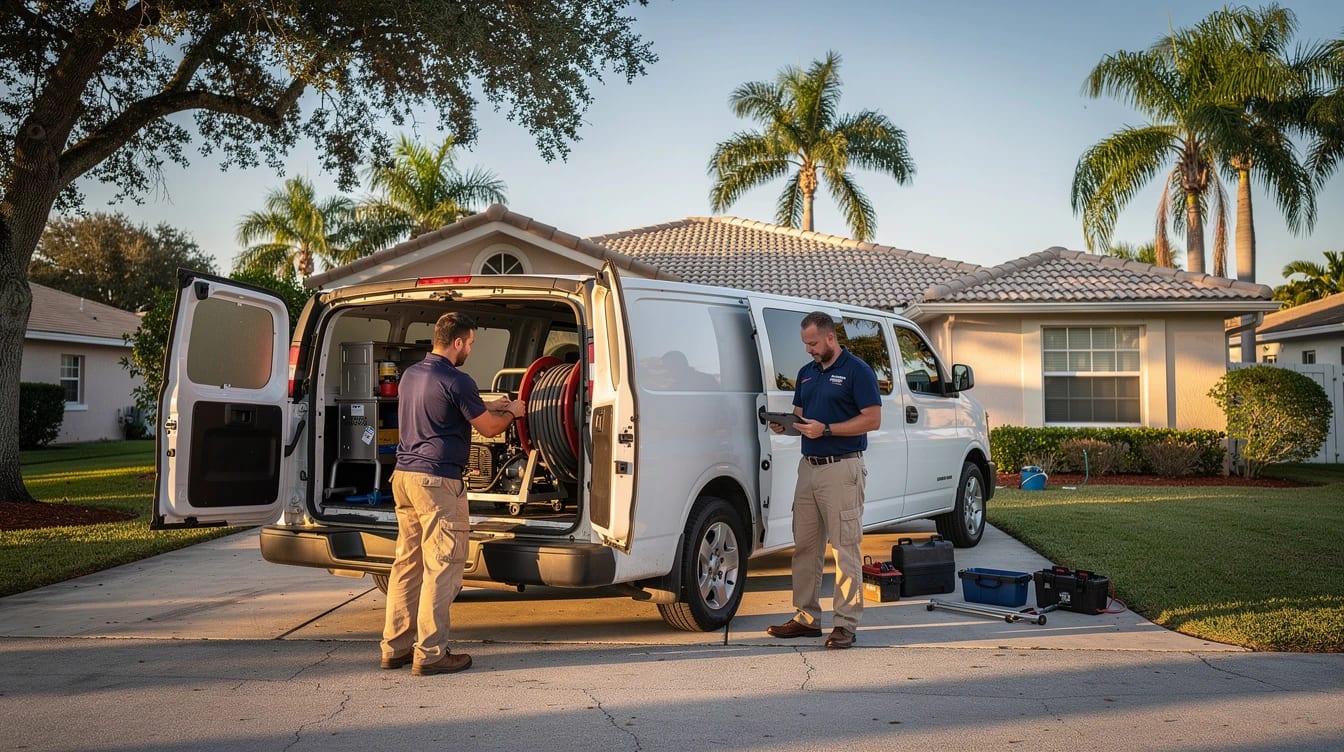
A concealed water line doesn't wait for a convenient time to fail. It quietly inflates your utility bill, softens the subfloor, and feeds mold you can't see yet. We trace the exact source with acoustic listening gear, electronic tracing and thermal cameras, so we open the smallest spot possible.
What a hidden leak looks like in real life
An unexplained jump in your bill
Your usage climbed without a new appliance, guests, or a leaky toilet flapper to blame. An underground supply leak keeps flowing around the clock, and the meter never takes a break to notice.
A warm patch or soft spot
A tile floor that feels noticeably warm in one area often points to a hot-water line leaking below the slab. Cupped wood, bubbled laminate, or a soft feel underfoot can signal the same thing near a foundation.
A hiss with everything off
Standing in a quiet room with every faucet closed, you catch a faint trickling or hissing sound. Pressurized pipes make noise right at the failure point, which is exactly the signal our acoustic sensors are built to find.
A musty odor with no source
Broward's humidity accelerates mold growth once moisture gets trapped behind a wall or under a cabinet. A stale smell that lingers near a specific corner of the house usually traces to plumbing hidden just out of sight.
Showers that have lost their punch
A tiny corrosion hole in an old copper or galvanized line steadily drains system pressure. If your shower has gone weak and faucets sputter for no clear reason, water is likely leaving the system somewhere unseen.
Your own meter test confirmed it
You shut off everything in the house and still watched that small leak-indicator dial creep forward. That's a reliable confirmation, and it's the point where our detection equipment takes over to find exactly where.
Six steps to a pinpointed answer
Confirm and separate
We pressure-test the supply lines first to confirm a genuine leak and rule out irrigation, pool equipment, or a drain issue. Splitting hot from cold tells us right away whether we're hunting a supply break or a waste-line problem.
Ground-mic the slab
Amplified acoustic sensors let us hear pressurized water escaping through concrete and soil. We walk the suspect area in a grid pattern, marking where the sound of escaping water is loudest and most consistent.
Trace the line electronically
On tougher cases we run an inert tracer or use line-tracing tools to follow the exact pipe path and check it against the acoustic hit. A second confirming signal keeps us from marking the wrong location.
Check it with thermal imaging
A thermal camera exposes the temperature shift a leak leaves behind in flooring and walls. A hot line under tile or a cool damp zone behind drywall becomes visible immediately, adding a third layer of confirmation.
Mark the spot, document everything
Once we agree on the location we mark it, photograph the readings, and put together a plain-language findings report. If you're filing an insurance claim, this gives your carrier the cause, the location, and the proof they need.
Walk you through the fix
With the leak pinpointed, we lay out the repair paths: a small spot repair, rerouting the line to avoid re-cutting the slab, or a broader repipe if the plumbing is aging throughout. You pick the direction before any work begins.
A quick check before you pick up the phone
You can confirm a hidden leak yourself in about fifteen minutes. Shut off every faucet, the washing machine, the ice maker, and check that no toilet is quietly refilling. Locate your water meter, usually near the curb or in a small ground box, and write down the reading along with the position of the small leak-indicator triangle.
Let thirty minutes pass without using any water, then check the meter again. Any movement means water is leaving the system somewhere. To narrow it further, shut the main valve at the house and watch again: if the meter stops, the leak is inside the home; if it keeps turning, the leak sits on the line between the meter and the house. Call us with that result and we'll head straight to the search.
Tell us what the meter did(754) 304-0006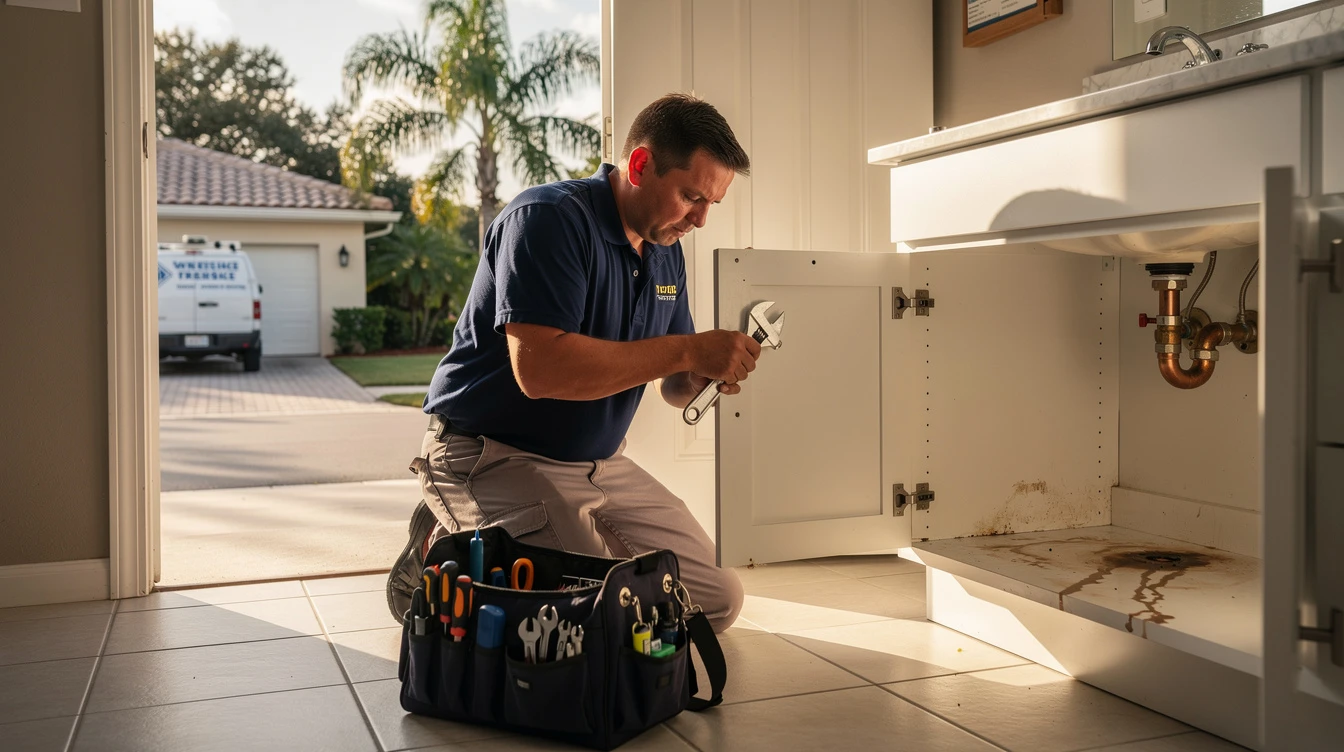
Why one visit costs more than another
Every leak sits in a different spot, under different flooring, in a different house. Here are the real factors we weigh, and you'll see the number before we start any work.
Depth of the leak
An exposed pipe under a cabinet locates quickly; a leak buried beneath a finished slab needs more equipment and more time to isolate.
Square footage to cover
A large single-story home with a long plumbing run takes longer to grid-search than a small condo.
Flooring type
Dense stone, thick concrete, and layered tile absorb acoustic signal, meaning we lean harder on thermal and electronic methods to confirm.
How many leaks are suspected
Aging copper or galvanized systems sometimes have more than one weak point, and each has to be located on its own.
Report requirements
A full insurance-grade report with photos and thermal images takes longer to prepare than a quick verbal locate.
Access to the area
Furniture, tight crawl spaces, and built-in cabinetry all factor into how quickly we can reach and read the suspect zone.
The rest of what the same trucks carry
Whole-home repiping
Failing galvanized, aging polybutylene and pinholed copper swapped for new copper or PEX, planned around your schedule so the household isn't left dry.
See repiping →Emergency plumbing
Burst supply lines, flooded bathrooms, toilets that will not stop. One call and a licensed plumber heads your way, day or night.
See emergency service →Cast iron pipe replacement
Original cast iron that has scaled shut or split under the slab, pulled and replaced with PVC that outlasts the house.
See cast iron work →Sewer line repair
A root, an offset joint, a low spot or worn-out cast iron: we run a camera down the line before we ever pick up a shovel.
See sewer line repair →Water heater repair
Cold showers, tripped breakers, a tank weeping at the base. Tank and tankless diagnosed on the spot.
See water heater service →Leak detection questions, answered
Can a leak under my slab actually be found without breaking concrete?
Yes, and it's one of the most common calls we get, since so many Broward homes are built slab-on-grade with plumbing running through the concrete itself. We start with acoustic ground microphones to hear the escaping water, then cross-check with tracer methods and thermal imaging. A hot-water slab leak often reveals itself as a warm patch on the floor that the camera picks up right away. Once we've narrowed it to a specific point, we mark it so any repair opening stays as small as possible.
Will you have to tear open my walls to find the source?
Avoiding needless demolition is the whole point of our approach. Acoustic listening, electronic tracing, and thermal imaging all read through tile, drywall, and concrete without cutting anything open. In most cases we locate the leak with no openings at all, then cut one small, precise access point once it's time to actually repair it. That's a very different experience than the old method of opening wall after wall and hoping to get lucky.
How close can you get to the exact location?
On a typical pressurized supply leak, we usually pinpoint the source within a few inches. Accuracy jumps when we can layer methods together: an acoustic peak backed by a thermal reading and a pressure drop leaves little room for doubt. Deep slabs, dense stone flooring, and multiple leaks at once make the job harder, which is why we grid the area methodically rather than guessing. If a reading ever comes back unclear, we say so plainly instead of cutting blind.
Will my findings report actually hold up with my insurance company?
Yes. We put together a documented findings report showing where the leak was, what likely caused it, and the evidence behind that conclusion, including photos and thermal images where relevant. Insurers generally want proof of the source and confirmation the damage came from a sudden or hidden failure. Having that documentation ready before repairs begin usually keeps the claim process moving without unnecessary delays. Tell us about your claim upfront and we'll document with that in mind.
What determines the cost of a detection visit?
Cost depends on how deep the leak is hiding, the size of your home, the flooring we have to read through, and whether we're chasing one leak or several. A single accessible pipe is quick work; a slab leak beneath stone tile in a larger home needs more equipment and more time. If you also want a full insurance-ready report, that adds documentation time on top. We look at the situation, walk you through what's driving the cost, and give you a firm number before starting. Nothing moves forward without your approval.
Get a straight answer, not a guess
Every day a hidden leak keeps running, it adds to your water bill and gives mold a head start in our humidity. Let a local licensed team pinpoint it without tearing up your home, and hand you documentation your insurer can actually use.
Call now · 24/7(754) 304-0006Licensed & insured · FL CFC1433655 · Written warranty on parts and labor · Water actively running where you can see it? Skip the form and call.