
Whole-home repiping in Cooper City, copper or PEX.
Discolored water at the first tap, a shower that fades to nothing the second someone runs the sink, a copper joint that keeps weeping: those aren't fixture problems. We swap out failing galvanized, aging polybutylene and pinholed copper for new lines, planned around your schedule so your household isn't left dry.
When it's the pipes, not the fixture
A single dripping faucet is a fixture repair. A house that keeps producing new leaks, dropping pressure, and clouded water from different spots every few months is telling you something bigger is failing behind the walls. Below are the patterns we hear most often from South Florida homeowners right before they decide a full repipe makes more sense than another round of patch jobs.
Brown or yellow-tinted water
If the water runs clear after a minute but always starts the day looking like weak tea, the inside of your galvanized steel pipe is rusting from within. It's not a water-quality problem you can filter away; the corrosion is coming from the pipe wall itself, and it only gets worse with time. Once it starts, the only real fix is removing that line and putting in something that won't rust.
Flow that fades under load
Decades of mineral buildup narrow the inside diameter of old copper and galvanized pipe the way plaque narrows an artery. Run the dishwasher and the shower stalls to a trickle, and it's not your water heater or your fixtures, it's the pipe itself choking off flow. A repipe opens the whole system back up to full-bore pressure at every tap simultaneously.
Recurring pinhole leaks
One pinhole in a copper line is a repair. A second one three months later, in a completely different wall, is a warning that the whole run of pipe is thinning at the same rate. Chasing each new leak as it appears is expensive and disruptive; replacing the entire run once ends the guessing game and the drywall repairs that come with it.
Original polybutylene still in the walls
Gray plastic supply line went into thousands of South Florida homes built through the late 1980s and into the 1990s, and it has a well-documented habit of cracking at the fittings with no warning. It doesn't rust or discolor water, so many owners don't know they have it until an insurer flags it or a joint lets go behind a wall. Replacing it proactively, before a failure, is far cheaper than a flood claim.
Warm spots or puddling on the floor
A warm patch of tile, an unexplained damp corner, or a water meter that keeps spinning with every fixture in the house shut off usually points to a supply line failing somewhere under the slab. Jackhammering the foundation to chase one leak is disruptive and often just delays the next one. Rerouting the line overhead through a repipe generally solves the underlying problem instead of one symptom.
Your insurer is pushing back
More South Florida carriers are declining to renew, or adding exclusions, on homes with original galvanized or polybutylene plumbing still in place. A permitted, inspected whole-house repipe gives you the paper trail underwriters actually want to see, and it's often the single fastest way to get a policy reinstated on an older property.
Six stages, from first look to final sign-off
Full walkthrough and fixture survey
We go room by room, count every fixture and hose bib, and check attic and wall access. Where a slab leak or hidden run is suspected we bring in leak detection before quoting, so the number we give you reflects the real scope, not a guess.
Permit filed, home protected
We file the plumbing permit with your city or county before any wall is opened. Floors get covered, furniture gets moved or masked, and we mark the minimum set of access points needed to reach every run, so the disruption stays contained.
New lines go in
Copper or PEX is routed through the attic and walls to every fixture in the house while the old failing lines are capped off or removed. We stage the cutover so that even mid-project, your household still has water flowing again before the crew leaves each evening.
Pressure test
Before any drywall closes, we pressurize the whole system and hold it to confirm every joint is sound, then walk each fixture to check for drips or slow leaks that wouldn't show up under normal use. Nothing gets covered until it passes.
County inspection and sign-off
Your local building department comes out to inspect the completed work before we close a single access point. That sign-off is the record that makes the repipe official and code-compliant, the same record many insurers want to see before renewing an older policy.
Patch, warranty, paperwork
We close the openings per the scope you approved, leave the home clean, and hand you a written warranty on both materials and labor along with copies of the permit and the inspection record for your files or your insurance agent.
We help you choose, not guess
Copper has decades of track record, holds up well against UV and physical damage where lines are exposed, and is still the material a lot of owners simply prefer for its permanence.
PEX flexes around framing with fewer joints, resists the scale buildup and pinhole corrosion that shorten copper's life in our hard, mineral-heavy South Florida water, and typically means smaller access openings when we open a wall.
Both materials are fully code-approved and both are covered by our written warranty. On your walkthrough we walk the fixture count, look at how the lines run through your attic, walls, and slab, and recommend the option that fits your house and your budget, then the decision is yours.
Book a walkthrough(754) 304-0006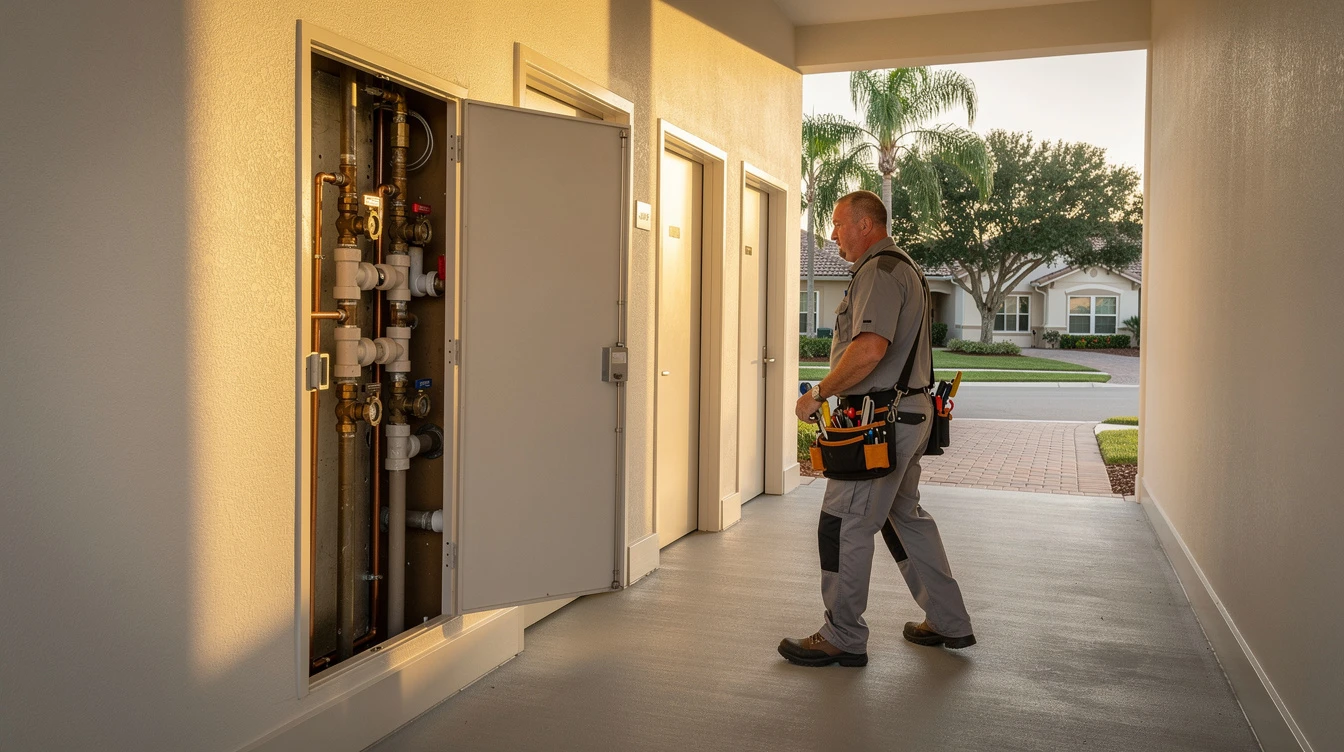
What moves the number: why one repipe quote isn't like the next
Two homes on the same street can land at very different repipe costs, and it's not padding, it's the underlying house. Here's what actually shifts the estimate we hand you at the walkthrough, so the final invoice never comes as a surprise.
Fixture count
A one-bath cottage repipes faster and cheaper than a five-bath house with a pool bath and an outdoor kitchen sink.
Copper vs. PEX
Material cost, joint count, and how many access points the routing needs all shift depending on which one you pick.
Single story vs. two-story
A slab-on-grade layout with attic access is quicker to route than a two-level house with lines threading through interior walls.
How buried the runs are
Open attic space is fast to work with; lines boxed in behind tile, built-ins, or finished ceilings take longer to reach.
Drywall access scope
How many openings we cut and patch is defined in your written estimate before work starts, never added on afterward.
Permit and inspection fees
Filing and inspection costs vary by city and county, and we build them into the number up front rather than surprising you later.
Other work we take on in Cooper City
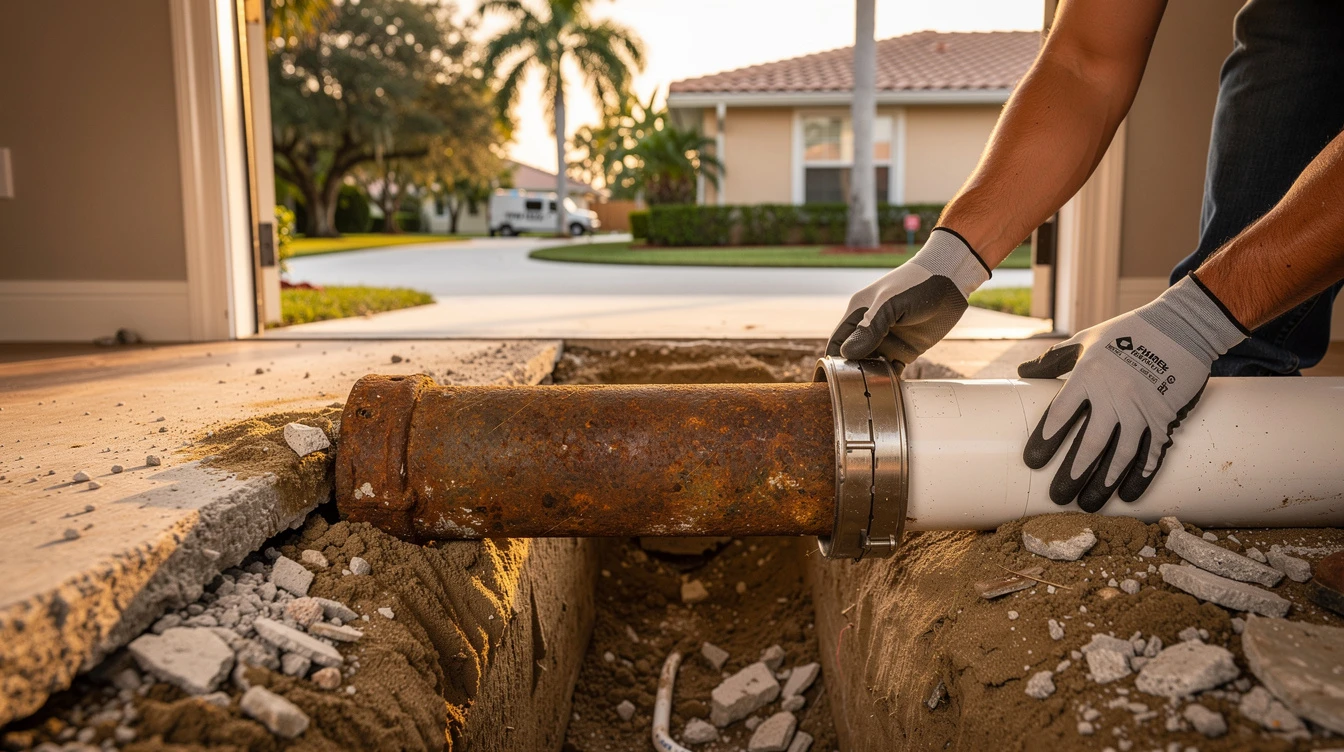
Cast iron pipe replacement
Original cast iron that has scaled shut or split under the slab, pulled and replaced with PVC that outlasts the house. Worth asking about while the supply lines are open.
See cast iron work →Leak detection
A bill that climbed with no puddle to show for it. Acoustic and electronic tools find it without opening walls, and we bring them in before quoting a repipe.
See leak detection →Emergency plumbing
Burst supply lines, flooded bathrooms, toilets that will not stop. One call and a licensed plumber heads your way, day or night.
See emergency service →Water heater repair
Cold showers, tripped breakers, a tank weeping at the base. Tank and tankless diagnosed on the spot.
See water heater service →Drain cleaning
Kitchen sinks, tub drains and main lines cleared with cable or hydro-jet, whichever the blockage actually needs.
See drain cleaning →Repiping, explained plainly
How disruptive is a whole-house repipe day to day?
Most homes stay livable through the project. We section off the areas where lines run, protect flooring and furniture with covers, and work through access points rather than opening entire walls. The biggest disruption is usually noise from cutting and a bit of dust despite our containment, both of which end each day. We schedule the cutover between old and new lines so water is restored before we leave, and most households manage cooking and showering with minor timing adjustments rather than going without.
Copper or PEX: which one should I actually pick?
There isn't a universally right answer, it depends on your home and priorities. Copper is rigid, proven over decades, and some owners simply prefer it for exposed sections. PEX flexes through framing, needs fewer joints so there's less chance of a future leak point, and generally resists the mineral scale that shortens copper's life in our water. It also usually means smaller wall openings, which means less drywall to patch. We'll walk you through both during the estimate, but the final call is always yours.
How many holes will you actually cut in my walls?
We map out the minimum number of access points needed to route lines to every fixture before we ever cut into a wall, and that count is written into your estimate so there's no ambiguity later. Attic-accessible homes usually need far fewer openings than homes where lines run through interior walls with no attic path. We patch every opening we make as part of the job; final paint and texture matching are typically a separate step we'll flag clearly, so you know exactly where our scope ends.
Do you pull the permit, or is that on me?
We handle it. A whole-house repipe is permitted work in every South Florida jurisdiction we service, and we file with your city or county, schedule the required inspection, and keep copies of both for your records. That inspection is what turns the job into documented, code-compliant plumbing, and it's frequently the exact paperwork insurance carriers ask to see before renewing a policy on a home with older piping. You never have to chase down the paperwork yourself.
My insurer flagged old piping. What's my next step?
Start with a walkthrough so we can confirm exactly what's in your walls, whether it's original galvanized, gray polybutylene, or aging copper, and how much of the system is affected. From there we give you a written scope and quote, and once the repipe is complete and inspected, you'll have the permit and inspection documents to send your agent. Most homeowners find this resolves the renewal issue outright rather than just delaying it another policy cycle.
Stop patching pipes that are already done
Whether it's rusting galvanized steel, original polybutylene, or copper that keeps opening new pinholes, Cooper City Emergency Plumbing SFL replaces it with fresh copper or PEX, filed with the permit, verified by inspection, and covered by a written warranty on materials and labor.
Call now · 24/7(754) 304-0006Insured · FL CFC1433655 · Serving Broward, Miami-Dade and Palm Beach from our Davie base at 4491 South State Road 7 · Water actively flooding? Skip the form and call.