
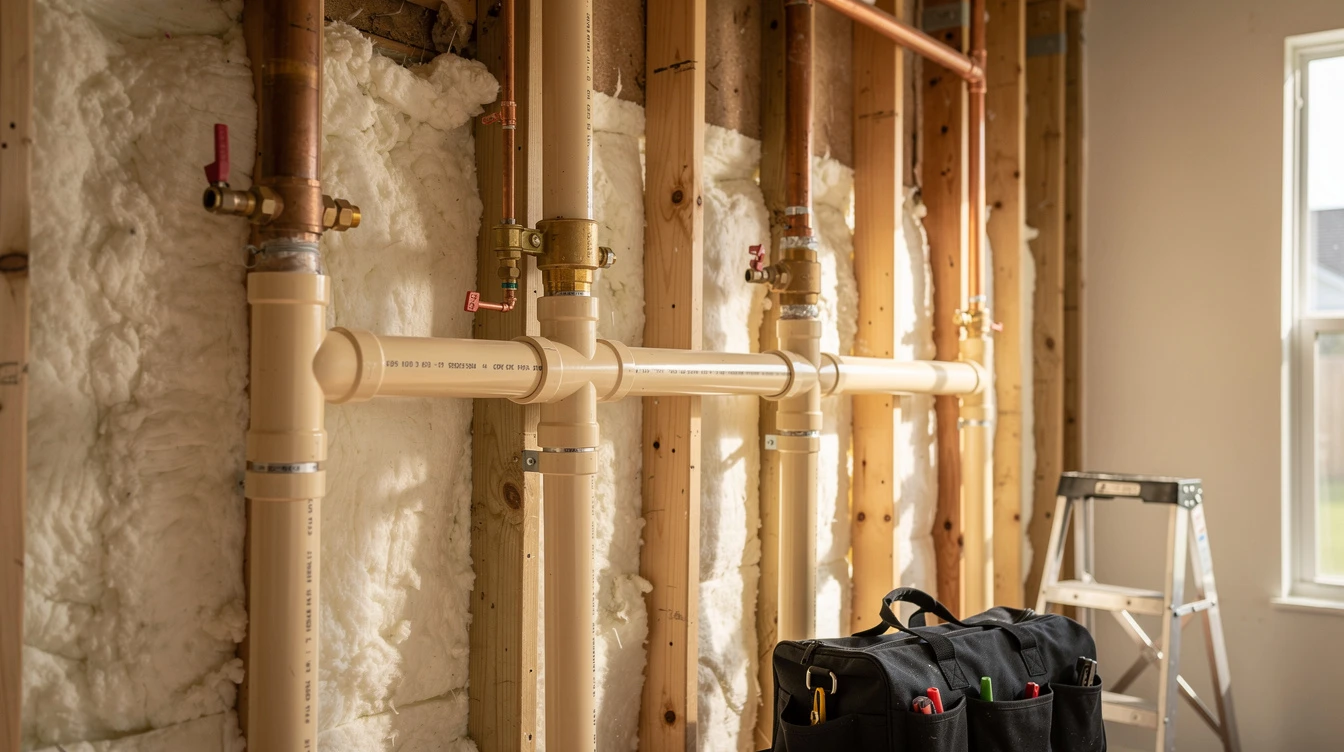
Sewer line repair in Cooper City. The camera goes down before the shovel.
Backups, gurgling drains, or a soggy patch in the yard usually trace back to one section of pipe: a root, an offset joint, a low spot, or worn-out cast iron. We run a camera down the line before we ever pick up a shovel, so you know exactly what's wrong and what it will take to fix it.
What a failing sewer line usually looks like
Every drain backs up together
If flushing the toilet sends water rising in the shower, or the washing machine drain fills the tub, the trouble isn't one fixture. It's the shared pipe underneath the house, and it needs to be looked at before another load of laundry sets it off again.
Tree roots working into a joint
Big shade trees along older streets send fine roots straight toward the moisture inside a sewer pipe. Once they find a seam or a hairline crack, they fan out inside the line like a net, catching wipes and grease until the flow simply stops.
Shifted or separated pipe joints
South Florida's sandy, moving soil doesn't sit still under a slab foundation, and neither does aging clay or cast iron pipe. Once a joint pulls apart even slightly, waste catches on the lip and builds a dam that grows with every flush.
Water that never fully clears
A dip in the pipe, what we call a belly, holds a pool of water and waste long after everything else should have drained away. Snaking clears the surface for a week or two, but the low spot itself keeps refilling until that section is corrected.
Older cast iron choking down
Homes built decades ago often still run on the original cast iron below the slab. Years of mineral buildup and rust flake off the interior walls, narrowing what was once a wide-open pipe into something closer to a straw.
An odor indoors or a wet spot outside
A sewage smell that lingers after the drains have run, or a sunken, spongy patch of grass that never dries out, both point to a line that's leaking below grade. Neither is something to wait out; both tend to get worse fast.
How a sewer line repair actually happens
Run the camera and locate the fault
We feed a self-leveling camera down the cleanout and watch the footage on a monitor beside you. A transmitter inside the camera head lets us mark the depth and exact spot of the problem in the yard, so nobody is digging on a hunch.
Read the pipe
On the recording we can tell roots from an offset joint, a belly from scale buildup, and gauge how much of the line each issue actually touches. That read is what determines whether we recommend a spot repair or a longer replacement.
Put the scope in writing
You get a written scope with a firm price before anything is cut open. Where a permit is required, we file for it and schedule the plumbing inspection ourselves so there's nothing left for you to track down after the fact.
Set up the site before we dig
We lay tarps across the work path, cut and stack sod separately from subsoil, and keep the excavation as narrow as the repair allows. Any trench that needs it gets shored properly so the crew can work safely down to the pipe.
Cut out the bad section and rebuild
The damaged run is removed and rebuilt in new Schedule 40 PVC, sloped and coupled properly so water actually moves the way it's supposed to. Before we ever backfill, we run the camera through the new pipe to confirm the flow is clean.
Inspect, backfill and restore the yard
Where a permit was pulled, we meet the inspector on site, then backfill in compacted layers and put the soil and sod back the way we found it. You keep a copy of the passed inspection and a written warranty on the repaired section.
We let the footage pick the fix, not the estimate
Plenty of sewer lines don't need to be dug up from end to end. If the camera shows one bad joint or a short offset surrounded by otherwise solid pipe, we cut in and replace just that section, which keeps the cost and the disruption small.
If instead the footage shows scale running the length of the pipe, several bellies, or joints separating in more than one place, a single patch would only buy a short reprieve before the next backup. We record the whole run, point out exactly where each issue sits on the video, and walk you through the honest tradeoffs so you're the one making the call, backed by what the camera actually found.
Book a camera inspection(754) 304-0006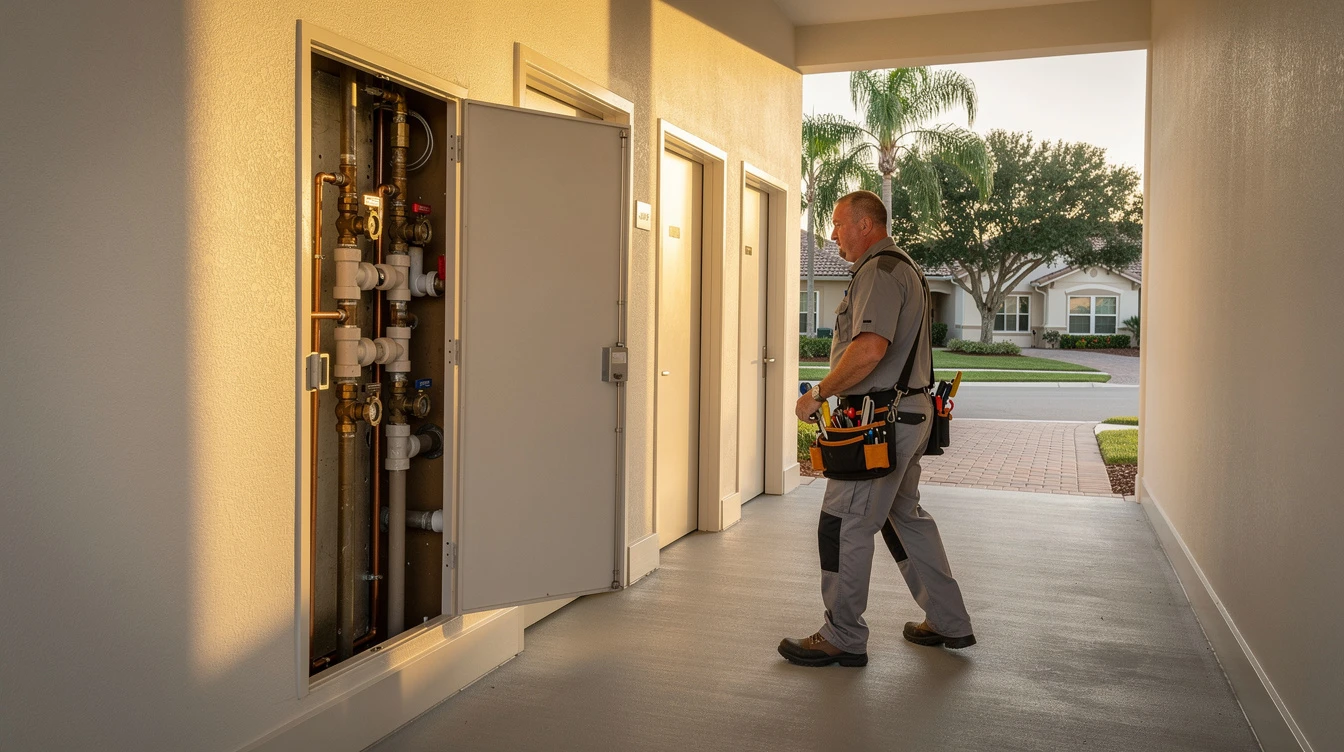
What actually changes a sewer repair quote
Every sewer job is a little different, and the number reflects that. Here's what genuinely moves the price once we've seen the footage.
How deep and how long the damaged run is
A shallow fault a few feet from the cleanout is a very different job from one buried under a walkway.
Spot fix versus full re-lay
Correcting one section costs a small fraction of replacing the entire run.
What's sitting on top of the line
Plain grass is straightforward, but a paver patio, driveway slab, or a mature tree root ball over the pipe adds real time to the dig and the restoration.
Age and material of the existing pipe
Older cast iron or clay tends to crumble further than expected once it's exposed and disturbed.
Local permit requirements
What's required, and how quickly it can be scheduled, varies by municipality.
How much restoration the yard needs
Re-sodding a lawn is quick; rebuilding concrete or pavers after an open dig takes more.
Based in Cooper City, running crews across the region
West Broward
Greater Fort Lauderdale
Miami-Dade reach
Other work we take on
Trenchless sewer repair
When the pipe still holds its shape, the new line goes in through one access point.
See trenchless repair →Cast iron replacement
For pre-1970s drain lines that keep backing up no matter how often they get cabled.
See cast iron replacement →Hydro jetting
Pressure clearing years of scale and grease out of a main line.
See hydro jetting →Drain cleaning
Clearing blocked fixtures and main lines that keep coming back after every snake.
See drain cleaning →Emergency plumbing
A sewer backup at midnight is a call we take at the same rate as noon.
See emergency service →What homeowners tell us after the dig is filled back in
I was already bracing for a whole yard replacement. They ran the camera first and it turned out to be a single offset joint near the cleanout. Fixed it in an afternoon and showed me the footage the whole way through.
Homeowner · Broward
Old clay pipe had roots throughout. They pulled the permit, coordinated the county inspection, and kept me updated the entire time. Everything drains fine now and I have the paperwork to show it passed.
Homeowner · Broward
What stood out was how careful they were with my landscaping. Sod came up in strips and went right back down after, and you'd never guess a crew had dug a trench through the yard a week later.
Homeowner · Broward
We kept snaking the same clog every couple of months for a year. The camera showed a low spot in the line holding standing water. They replaced that section and the recurring backups just stopped.
Homeowner · Broward
Sewer line repair, answered
What exactly does the camera inspection show us?
We push a waterproof camera from the cleanout all the way toward the street connection and record the entire run in real time. On the screen we can point out a root mass working through a joint, a section that's dropped and holding water, rust flaking off aging cast iron, or a joint that's pulled apart. A small transmitter in the camera head lets us mark the exact depth and location of any problem above ground, so if digging is needed we know precisely where before the first shovel goes in. You're welcome to watch the whole thing with us.
Once roots are cleared, do they just come back?
They will if the entry point is still open. That's why we don't stop at clearing the growth out of the pipe. We cut out the compromised section and rebuild it with new solid PVC and sealed couplings, so there's no crack or gap left for roots to find their way back through. If a large tree sits directly over the repair, we'll mention it honestly, since roots from mature trees are persistent. But once that section of pipe is intact again, that particular entry point is closed for good, and it's covered under our repair warranty.
Will you handle the permit and the inspection for me?
Yes. Any repair that involves opening the ground typically needs a plumbing permit, and the exact requirement depends on your municipality. We file the paperwork, coordinate scheduling with the local building department, and meet the inspector at the site ourselves. Once it passes, you get a copy of the signed-off inspection for your records. That matters more than it seems, because unpermitted sewer work can become a real headache later if you go to sell the house or file an insurance claim.
How long is my yard going to be torn up?
A single spot repair near the cleanout, on shallow soil, is often wrapped up in a day: dig, replace, camera-check, and backfill. A longer replacement, or a repair under a driveway or mature landscaping, can run several days once you factor in restoration. If a permit and inspection are required, scheduling with the county can add a step or two depending on the jurisdiction. When we hand you a written scope, the timeline in it is built around your actual line and yard, not a generic average.
Why not just replace the whole sewer line to be safe?
Because it's often unnecessary and always more expensive. If the camera shows the rest of the line is in good shape and the problem is contained to one joint or one short offset, replacing the entire run just adds cost and yard disruption without fixing anything more than the spot repair would. On the other hand, if the footage shows scale and separation throughout the pipe, we'll tell you that too, since patching one spot on a failing line only postpones the next call. We base the recommendation on what the video actually shows, not on which option costs more.
Get eyes on the pipe before anyone starts digging
A camera inspection shows the real problem, we give you an honest recommendation on spot repair versus full replacement, and our crew handles the permit, the dig, the yard, and the final inspection. Cooper City area repairs come with a written warranty on the section we fix.
Call now · 24/7(754) 304-0006Licensed & insured · FL CFC1433655 · Cooper City Emergency Plumbing SFL, 4491 S State Road 7, Davie, FL 33314 · Drains backing up right now? Skip the form and call.