
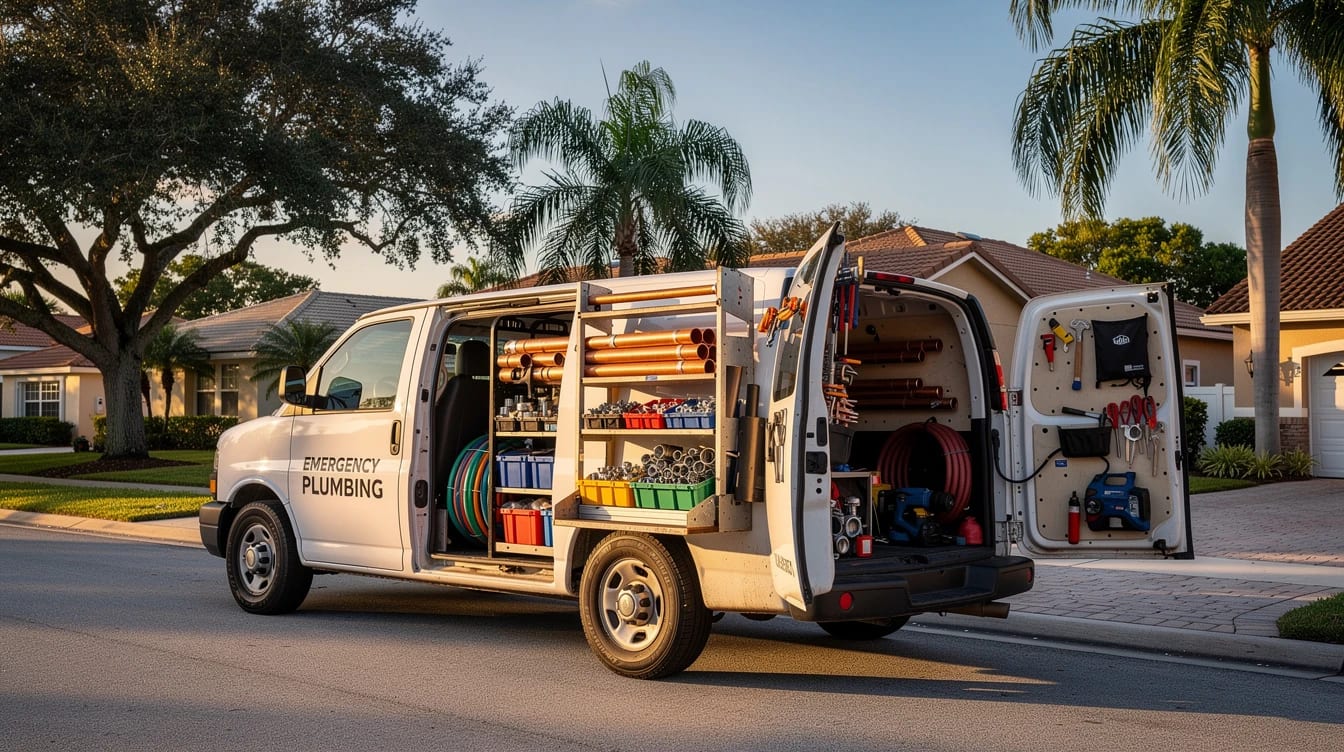
Emergency plumber in Miramar, 24/7, from Historic Miramar out to Riviera Isles.
Miramar is two cities in one: the 1950s blocks off Miramar Parkway in the east, and the 2000s construction out around Monarch Lakes and Sunset Lakes. Our techs know which half of town they are headed to before the truck leaves the yard.
Bimodal, not gradual: 1955 in the east, 2000 in the west
Miramar was built in two waves with two quiet decades in between, and that is the whole diagnosis. A. L. Mailman started selling flat-roofed concrete block houses here in 1955, and the city went from 5,485 people in 1960 to 23,997 in 1970. Then it stalled: 32,813 in 1980, 40,663 in 1990. The west exploded afterwards, to 72,739 by 2000 and 134,721 by 2020. Almost nothing was built in the middle, so Miramar cannot be read like Pembroke Pines, where the material changes gradually as you drive west.
On the older east side, Historic Miramar and the 33023 and Miramar Isles, those block houses sit on slab with cast iron drainage underneath and galvanized supply feeding the fixtures. At 65 to 70 years they are well past the 40 to 60 year service life of cast iron, which in this humidity corrodes from the inside out until the bottom of the pipe channels away. Rust builds up inside galvanized pipe until the flow narrows to a trickle. A kitchen line that clogs every month is not a bad habit, it is metal reaching the end of its usable life, and a break under the slab drags fill with it until the floor itself starts to move.
Polybutylene carries less weight here than in Cooper City or Pembroke Pines, and the reason is demographic rather than technical: the grey pipe was installed between 1978 and 1995, and that stretch was the slowest decade Miramar ever had, barely 7,850 new residents in ten years. It does exist in some of the older west-side builds, and when it goes it goes at the crimped fittings rather than along the run, but it is not this city's main story the way cast iron is.
Head west to Sunset Lakes, Vizcaya, Monarch Lakes, Huntington and Riviera Isles, which only started going up in 2000, and it flips to PVC drainage and CPVC supply throughout. Out there the work is heaters, valves and pressure, not repiping. Those slabs sit close to the water table around Miramar's lake network, so a small under-slab leak can soak a subfloor for weeks before anything shows. That whole side is fed from the West Water Treatment Plant, which draws brackish water from the Floridan aquifer about 1,400 feet down, against the 100 to 150 feet of the Biscayne, and treats it by reverse osmosis and nanofiltration at up to 11.5 million gallons a day.
We locate the leak with acoustic and pressure equipment before anyone touches a slab, so the hole we cut is the right one. Before we quote anything we look at the age of the house, its plumbing material and its water, because a fix based on guesswork usually costs more the second time around.
Book a camera inspection(754) 304-0006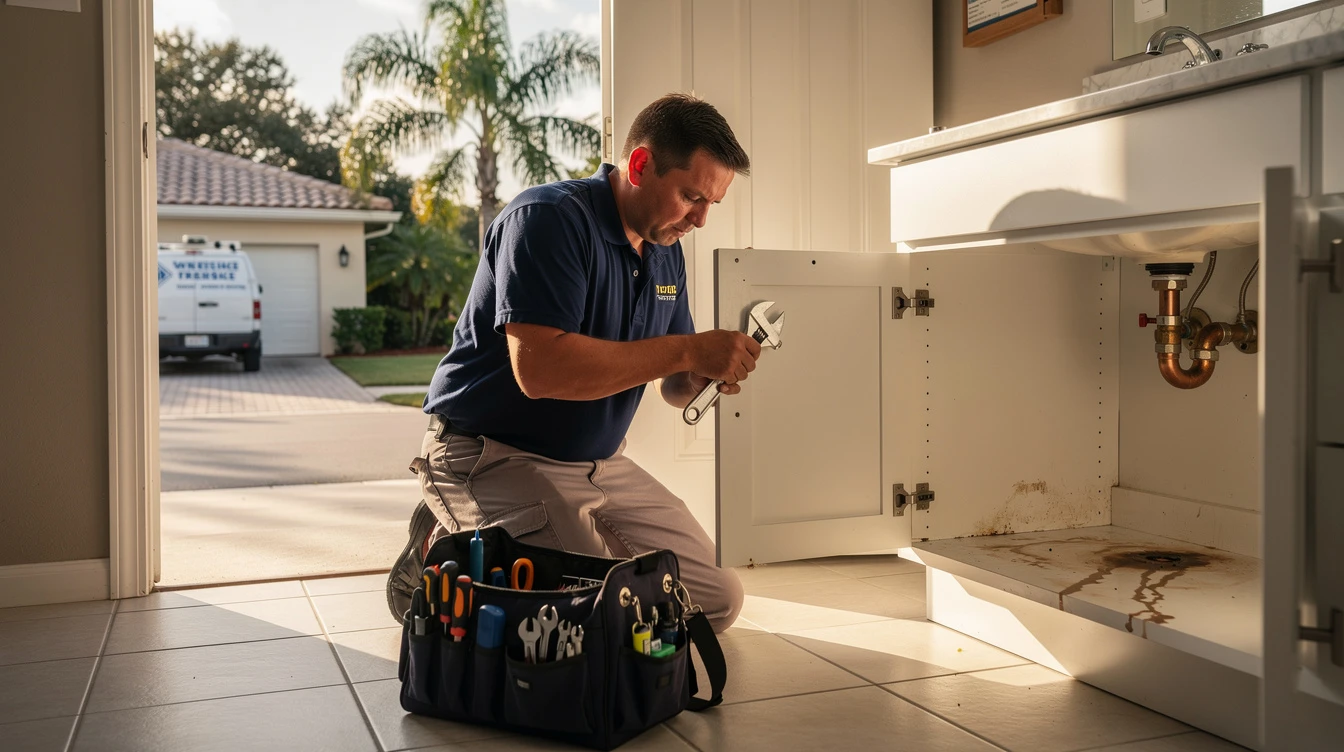
Emergencies first, everything else same week
Emergency plumbing
A pipe lets go at 2 a.m., water is spreading across the tile, and you need someone on the way now. We answer around the clock across Miramar and shut off the source before we diagnose anything else.
See emergency service →Cast iron replacement
Old cast iron under east Miramar's slabs cracks and bellies as it ages, and patching one bad section rarely fixes the whole run. We map the failing pipe and swap it for PVC, opening only what is necessary.
See cast iron work →Leak detection
A damp baseboard or a rising water bill near Silver Shores or Vizcaya often means a slab leak the naked eye cannot find. We use acoustic listening and pressure testing to locate it before opening a single tile.
See leak detection →Repiping
Whether it is corroded galvanized on the east side or brittle polybutylene fittings out west, a whole-house repipe stops the string of leaks. We plan around your slab and the lake-adjacent water table rather than guessing at the layout.
See repiping →Drain cleaning
Kitchen and bathroom lines that clog on a schedule usually point to scale buildup inside older cast iron. We camera the run first so you know whether it is grease, roots or a bellied pipe before we clear it.
See drain cleaning →Water heater repair
Miramar's mineral-heavy water shortens tank life across the board. We flush sediment, replace worn heating elements and valves, and descale tankless units before a small issue turns into a cold shower.
See water heater service →One yard on State Road 7, both halves of Miramar covered
Trucks run from our Davie yard, which puts the whole of Miramar inside the short end of our route sheet. You tell us the cross street and what the water is doing, and we already know whether the truck needs cast iron tooling for the east or leak-location gear for the west before it pulls out.
The same crews cover the rest of Broward, Miami-Dade and Palm Beach:
Something wrong with your plumbing in Miramar?
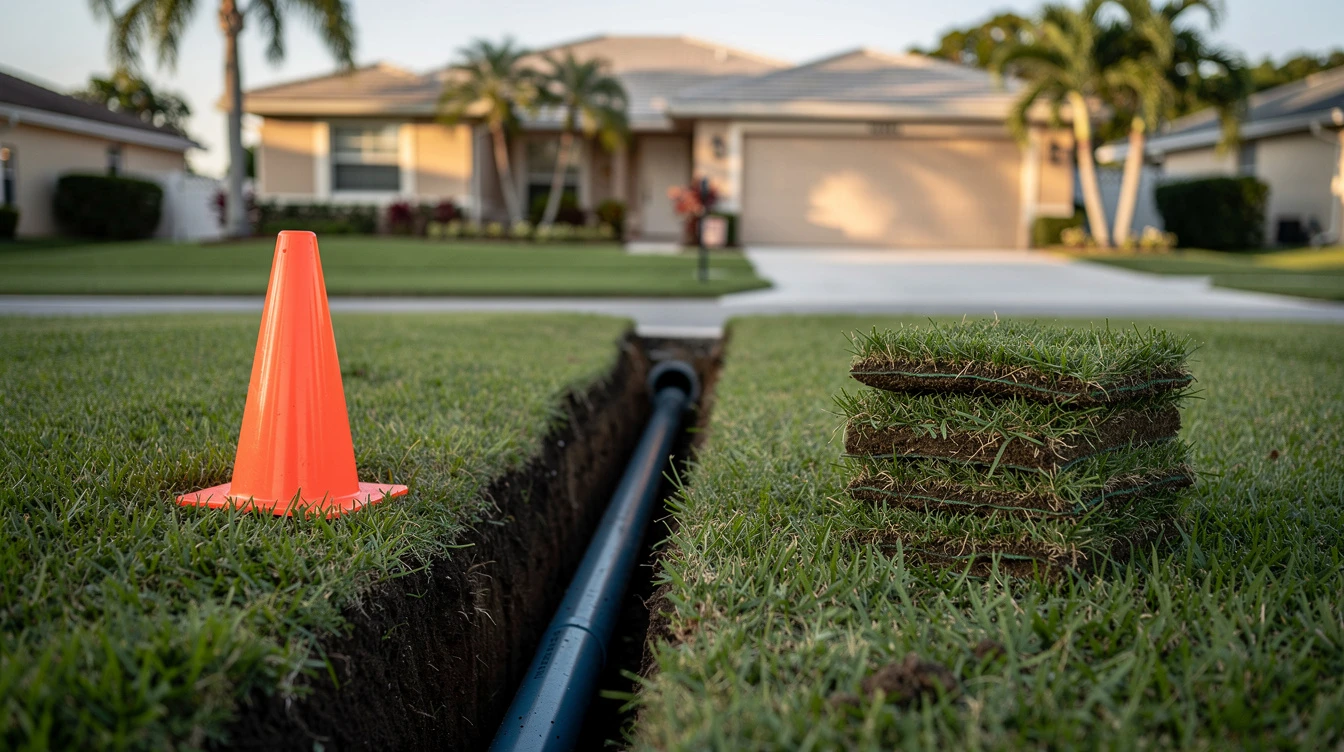
Corroded galvanized on the east side, a hidden slab leak near Silver Shores, or a water heater finally worn out by hard water: tell us where you are and what is happening, and we will bring the right equipment the first trip. Straight answers, one call.
Call now · 24/7(754) 304-0006Licensed & insured · FL CFC1433655 · Serving Miramar & Broward County · Water actively flooding? Skip the form and call.