
Water heater replacement and installation in Cooper City.
When your water heater quits, you want a working unit back fast, not a runaround. Licensed installers come out of our Davie shop to size the right heater for your home, file the permit, and get it installed to Florida code, with same-day appointments available.
How to tell your heater needs replacing
A water heater doesn't announce its own death, it just quietly gets worse. Some units only need a thermostat or element swapped, others are past the point where another repair is money well spent. Below are the signals our Davie-based techs look for on every visit, and we'll tell you plainly which side of the line yours falls on.
Past the ten-year mark
A tank heater is built for roughly eight to twelve years, and South Florida's mineral-heavy water tends to shorten that window. Once a unit clears a decade, another repair rarely buys much: a replacement typically pays for itself in efficiency alone.
Discolored hot water
Rusty or metallic-smelling water coming from the hot side almost always means the tank lining has broken down inside. There's no patching that from the outside, and a corroding tank tends to fail without much warning.
Water pooling at the tank
A puddle forming under the tank means the vessel itself has cracked, not a loose fitting you can wrench down. Once that happens, replacement is the only responsible fix before the leak spreads into a wall or floor.
Constant element replacements
If a thermostat or heating element has already been swapped more than once, sediment buildup is probably cooking parts faster than they can be replaced. A new unit stops that cycle instead of feeding it.
Running cold too soon
If the shower goes cold halfway through or the tank never seems to catch up, that's either a dying unit or one that was undersized for your household from day one. Upsizing or switching to tankless ends the guessing.
Sometimes repair wins
Not every failed heater needs a new tank. If yours is under eight years old with one specific problem, our water heater repair team may be the faster, cheaper answer, and we'll say so before recommending a full swap.
Six steps from old tank to hot water
Assess and size
We look at your household's hot water use, fuel type, and available space, then recommend the right unit: a 40, 50, or 75-gallon tank, or a tankless model sized to your flow rate.
File the permit
Water heater swaps in Broward, Miami-Dade, and Palm Beach all require a permit and a follow-up inspection. We file the paperwork and book the inspection so the job stays legal and insurable from day one.
Drain the old unit
Water and power get shut off, the old tank is drained safely, disconnected, and hauled off for disposal or recycling, whether it's sitting in a garage, attic, or tight utility closet.
Set the new unit to code
The replacement goes in with a proper drip pan, TPR discharge line, expansion tank, and hurricane strapping wherever it's required, exactly what an inspector will be checking for.
Fill, test, confirm
We fill the tank, bleed trapped air from the lines, fire it up, and check the temperature and every joint before calling the job done.
Warranty and paperwork
You leave with a written parts-and-labor warranty and an itemized invoice. If the old heater failed and caused water damage, we photograph it so your insurance claim has the documentation it needs.
Our honest take before you pick a unit
A tank heater costs less to buy, installs quickly, and is the natural choice when you're swapping a like-for-like unit and just want hot water restored today.
A tankless unit heats water only as you use it, never runs out mid-shower, and frees up closet or garage space, though it usually calls for a larger gas line or a dedicated circuit and a bigger check up front.
Before we quote either one, we look at your fuel source, household size, and where the unit actually sits. Sizes we fit most often are 40, 50 and 75 gallons, gas or electric, and every install carries the code items an inspector looks for: pan, TPR discharge and strapping.
Talk it through · 24/7(754) 304-0006
What shapes your installation price
We don't toss out a ballpark figure over the phone and hope it holds. Your price is built from a short list of real variables, and you sign off on the total before we touch anything.
Tank size
A 40-gallon swap for a couple is a different scope than a 75-gallon unit feeding a full house.
Fuel source
Gas installs bring venting and connection work that electric units don't need, and the reverse is also true.
Tank or tankless
A direct tank replacement is a short job; going tankless can mean resizing the gas line or adding a circuit.
Code items
Adding a drain pan, TPR line, expansion tank, or strapping where your current setup is missing them.
Access
A garage tank sitting out in the open is quick work; a heater buried in a tight attic or closet takes longer to reach.
Permit and haul-away
Both are baked into the quote, so what you approve is what you're charged.
Other work we take on in Cooper City
Water heater repair
Cold showers, tripped breakers, a tank weeping at the base. Tank and tankless diagnosed on the spot.
See water heater repair →Emergency plumbing
Burst supply lines, flooded bathrooms, toilets that will not stop. One call and a licensed plumber heads your way, day or night.
See emergency service →Whole-home repiping
Failing galvanized, aging polybutylene and pinholed copper swapped out for new copper or PEX supply lines.
See repiping →Leak detection
A bill that climbed with no puddle to show for it. Acoustic and electronic tools find it without opening walls.
See leak detection →Drain cleaning
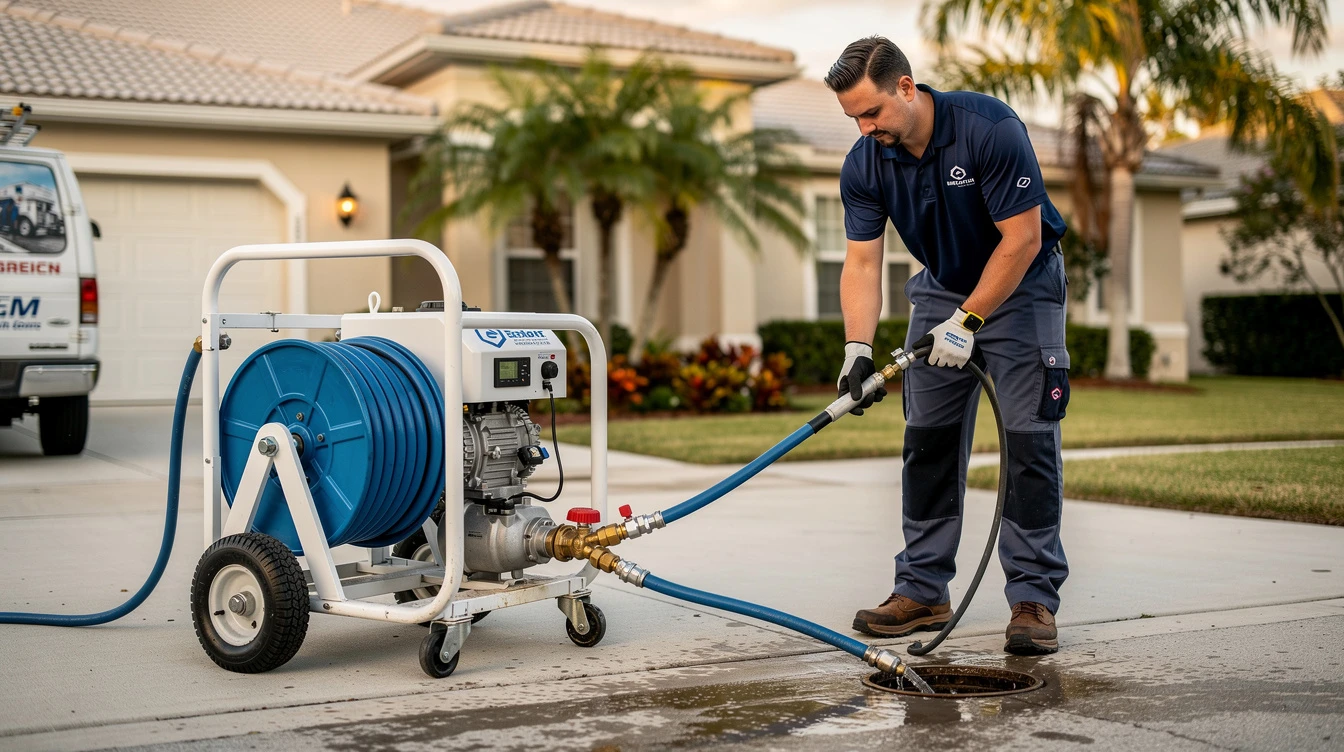
Kitchen sinks, tub drains and main lines cleared with cable or hydro-jet, whichever the blockage actually needs.
See drain cleaning →Water heater replacement FAQs
How fast can you actually replace my heater?
A standard tank swap in a spot we can easily reach usually wraps up in two to three hours, and we carry common sizes on the truck so most jobs finish the same day you call. Going tankless takes longer, sometimes most of a day, since it can involve resizing a gas line, adding venting, or running a new circuit. Tight attic or closet installs add time too. When we're on site sizing the job, we give you a real timeframe instead of a guess.
Is a permit really necessary for a heater swap?
Yes, in Broward, Miami-Dade, and Palm Beach counties, a water heater replacement touches gas, electrical, and water safety systems, so it requires a permit and inspection. Skipping it can jeopardize your homeowner's insurance and create problems later when you sell. We handle the permit filing as part of every job and schedule the inspection, making sure the drain pan, TPR discharge, expansion tank, and hurricane strapping meet current Florida code where required.
Should I upgrade to tankless or stick with a tank?
It comes down to how your household actually uses hot water. Tankless units heat on demand so you never run dry, they free up floor space, and they often last close to twenty years versus roughly ten for a tank. The tradeoff is a bigger upfront cost and, for gas models, sometimes a larger gas line. If your family constantly runs out of hot water or you're planning to stay in the home long term, tankless usually pays off. If you just need a reliable, budget-friendly swap, a quality tank still gets the job done.
What size heater does my house actually need?
Tank sizing comes down to how many people live in the home and when they use hot water most. A couple can usually get by with 40 gallons, while a family of four or more with multiple bathrooms tends to need 50 to 75 gallons. Going too small means cold showers at the worst moments; going too big wastes energy. Tankless units are sized by flow rate rather than gallons, based on how many fixtures might run at once and your incoming water temperature. We look at your fixtures and habits before recommending a size.
Do you take the old water heater away?
Yes, every replacement job includes removal of the old unit. Our crew drains it, disconnects it, and hauls it out for proper disposal or recycling, even from cramped attics or closets. You won't be left dragging a waterlogged tank to the curb or making a dump run yourself. Haul-away is built into the quoted price, so there's no surprise charge added at the end.
Ready to stop babying an old heater?
Whether you need a quick tank swap today or want to talk through a tankless upgrade, Cooper City Emergency Plumbing SFL sizes it correctly, files the permit, installs to Florida code, and hauls the old unit off your property. Licensed and insured, with a written warranty on parts and labor across Broward, Miami-Dade, and Palm Beach.
Call now · 24/7(754) 304-0006Licensed & insured · FL CFC1433655 · Cooper City Emergency Plumbing SFL, 4491 S State Road 7, Davie, FL 33314 · Water actively flooding? Skip the form and call.