
Toilet Leaking? How to Tell What's Wrong, and When to Call
A puddle by the base, a tank that keeps refilling, a faint drip behind the bowl. Toilet leaks come in a few recognizable flavors, and most give themselves away if you know what to look for. Here's a walkthrough of the usual causes, what's reasonable to tackle yourself, and when it's time to bring in a plumber.
First, locate the water
Every toilet runs on two separate water paths: a supply line bringing in clean water, and a drain carrying waste away. A leak can come from either side, or from one of the joints holding the whole assembly together. Before reaching for tools, spend two minutes figuring out exactly where the moisture is showing up. That single detail narrows the list of suspects fast and tells you whether you're looking at a quick fix or a real plumbing job.
Wipe every surface completely dry, then flush and watch closely. Does water show back up around the base? Is it a thin trickle near the shutoff valve? Does the tank keep making noise long after it should have stopped filling? Each of these points somewhere different.
Puddle at the floor: check the wax seal
Water gathering around the bottom of the bowl, especially right after a flush, almost always traces back to a worn wax ring, the seal sitting between the toilet base and the drain opening in the floor. Once it dries, cracks, or the toilet starts rocking on its mounting bolts, wastewater sneaks out with each use.
A couple of clues make this one easy to spot: an odor that's slightly off, and a toilet that shifts when you sit down. This isn't something you tighten your way out of. A proper fix means removing the toilet completely, cleaning off the old wax, inspecting the drain flange for damage, and setting the bowl back level with a fresh seal. Skip a step and the leak just comes back, often worse, while water keeps soaking into the subfloor underneath.
Why this needs quick attention
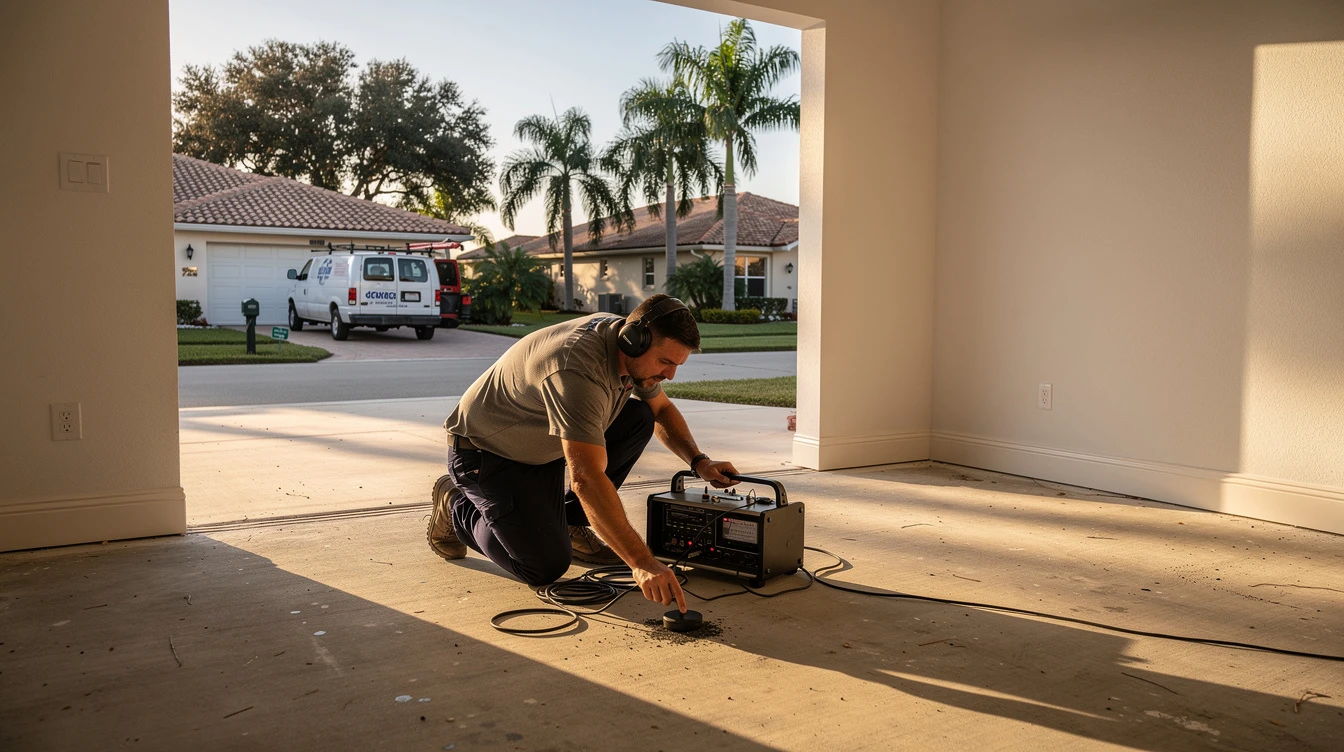
On a slab foundation, base leaks spread outward under tile and baseboards long before you'd notice from above. In a condo or townhome, that same water finds its way to the ceiling below. Our leak detection service can pinpoint hidden moisture before it turns into a bigger repair.
Drips from behind the bowl: the tank gasket
If water is running down the back of the toilet or pooling behind it, the tank-to-bowl connection is worth checking. That joint is held together by a rubber gasket and a couple of bolts, and both parts age over time: the rubber stiffens, the bolts corrode, and water starts weeping out during every refill.
Dry the connection and watch closely; beads forming near the bolt heads or along the gasket seam confirm the problem. A slight quarter-turn on the bolts sometimes helps, but go too far and you risk cracking the porcelain, which turns a minor repair into buying a new toilet. Replacing the gasket itself is possible for a patient DIYer, though many homeowners would rather have someone experienced handle it the first time.
Supply hose and valve drips
The flexible line feeding your tank, along with the shutoff valve behind it, is a common source of small, clean drips. You'll usually spot a thin trail of clear water below the connection point, no odor involved.
Reasonable to handle yourself
Snug up a loose supply nut by hand, adding a small turn with a wrench only if needed.
Swap out an old braided line once it starts to bulge or show rust.
Install a new flapper or fill valve inside the tank.
Better left to a plumber
A shutoff valve that leaks from the stem or refuses to fully close.
Anything involving the wax seal, flange, or a cracked bowl.
Water that's already reached flooring, drywall, or a unit below yours.
The mysterious running tank
Not every toilet leak lands on the floor. Some drain straight into the sewer without ever showing themselves, aside from a hissing tank or the toilet refilling on its own at odd hours. That's usually a worn flapper failing to seal shut, letting tank water trickle continuously into the bowl.
Here's an easy test: drop a bit of food coloring into the tank and wait about 15 minutes without flushing. Color showing up in the bowl means the flapper needs replacing. This repair is genuinely simple and cheap, but ignoring it means paying for wasted water month after month and putting extra strain on the fill valve.
Sweating tank, not a leak?
South Florida humidity is thick enough that a cold tank surface meeting warm bathroom air will condense, and that moisture looks a lot like a leak. Wipe it down and check the pattern: a fine, even film across the whole tank points to condensation, while a steady drip from one specific seam points to an actual leak.
When the toilet isn't really the problem
Occasionally the toilet is caught in the middle of a different issue. A partial clog further down the line can push water back up and out around the base, looking exactly like a failed wax seal. If a shower or sink elsewhere in the house is also draining slowly or gurgling when you flush, the real problem might be the drain line itself, which calls for professional drain cleaning instead of a new seal.
Damp baseboards, an unexplained jump in your water bill, or a warm patch on a slab floor can all point to a leak elsewhere that's simply showing up near the toilet. Our guide to spotting a hidden water leak covers what to look for throughout the rest of the house.
Not sure which one it is?(754) 304-0006
What it comes down to
A running tank or a small supply drip is often a manageable weekend project. Water at the base, a toilet that rocks, a cracked tank, or moisture that's already spread to your flooring is a different story, especially on a slab foundation or inside a shared building where hidden damage adds up quietly. When you're not sure, shut the valve, mop up, and make the call. It costs a lot less than repairing a subfloor later.
Cooper City Emergency Plumbing SFL handles toilet leaks throughout the area, from a straightforward reseal to tracking down water that's traveled somewhere it shouldn't. Call us anytime at (754) 304-0006. CFC1433655.
More helpful reading
A few more guides for catching plumbing trouble early and knowing what to do about it.
The full home plumbing guide
A broader look at leaks, clogs, and repairs from top to bottom of the house.
Main guide →Signs you might have a hidden leak
Warm spots, damp baseboards, rising bills: catching a leak before you can see it.
Related read →Leak detection
We locate moisture hiding in walls, under floors, and beneath slabs before it spreads.
Our service →Drain clogs
When a clog further down the line makes itself look like a toilet leak.
Our service →Get that toilet leak sorted before it spreads.
Shut the valve behind the bowl, mop what you can reach, then call. A real person answers, day or night, and there is no surcharge for the hour on the clock.
Call now · 24/7(754) 304-0006Licensed & insured · FL CFC1433655 · Cooper City Emergency Plumbing SFL, 4491 S State Road 7, Davie, FL 33314 · Water actively flooding? Skip the form and call.