
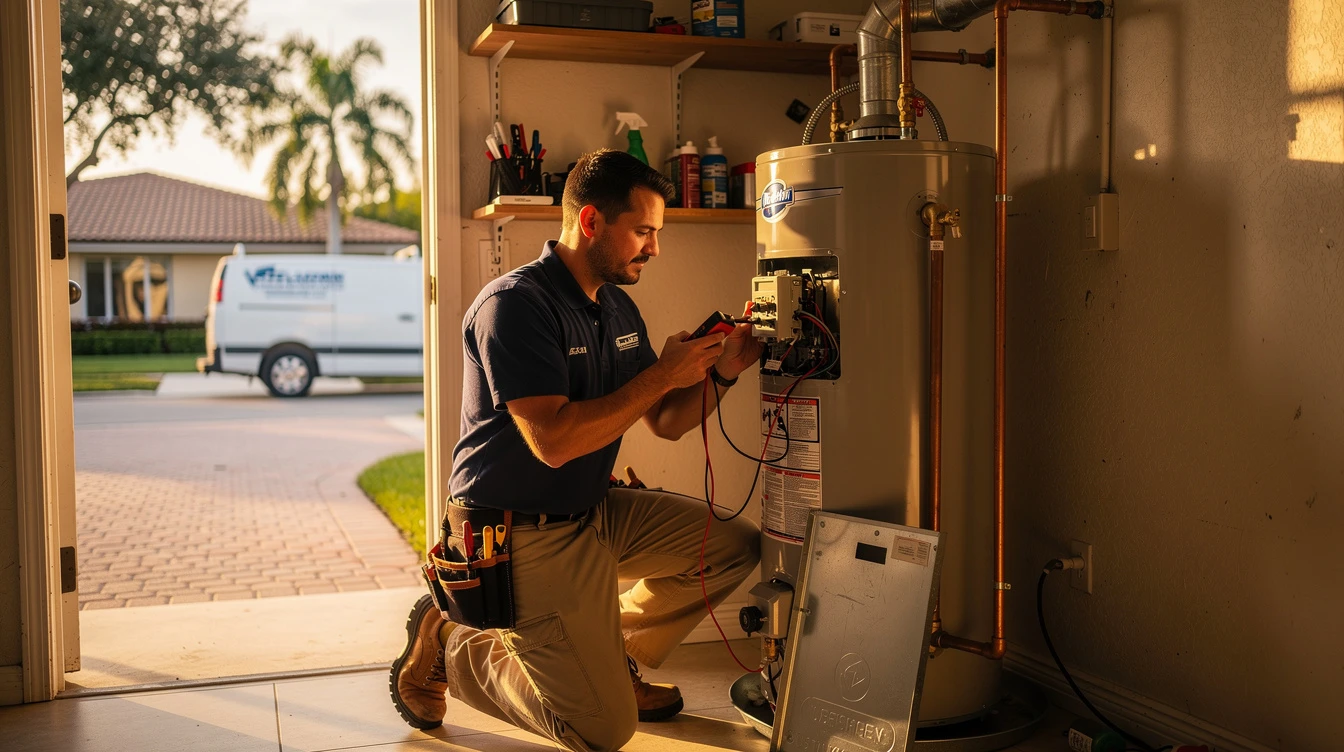
7 Signs Your Home Has a Hidden Water Leak
Most damaging leaks never show up as a puddle on the floor. They hide inside walls, under slabs, and behind cabinets, sending up small clues long before the drywall bubbles or the ceiling stains. Here's what to watch, listen, and feel for.
Why hidden leaks are the ones to worry about
A dripping faucet is an annoyance. A hidden leak is a slow-motion emergency. It can run behind a shower wall, under a kitchen cabinet, or inside the concrete slab your home sits on for weeks without anyone noticing, quietly soaking framing, feeding mold, and driving up your utility bill while everything above the surface still looks fine.
Homes across Broward County share a common vulnerability here: slab foundations. Copper and galvanized supply lines are frequently routed through or under that poured concrete, so when a joint corrodes or a pipe develops a pinhole, the water has nowhere to go but sideways into the soil and slab, then eventually up through the flooring. Add in Florida's humidity and mineral-rich water, both of which accelerate pipe corrosion, and hidden leaks become a routine call for our crews.
Below are seven signals that usually show up before the visible damage does. Catching even one early can save you a full remodel later.
1. Your water bill climbs without a clear reason
If nobody added a hot tub, nobody's watering a new garden, and the household routine hasn't changed, but your bill jumps 25 percent or more, that's the water company's meter telling you something is running around the clock. A pinhole leak doesn't take breaks, so even a modest flow rate adds up to serious gallons across a full month.
Pull your last two or three statements and line them up. A steady upward trend, not a one-time spike, is the pattern that matters.
2. The meter dial keeps spinning with everything shut off
This test takes ten minutes and no tools. Shut off every fixture and appliance in the house, then locate your water meter, typically near the curb or the edge of your property, and watch the small leak indicator or dial. If it's still moving with nothing running inside, water is escaping somewhere between the meter and your fixtures.
Quick check
Record the reading, wait 60 minutes without using any water, then check again. Any movement confirms a leak. Our leak detection specialists can then locate it without opening walls at random.
3. A warm patch on tile or concrete
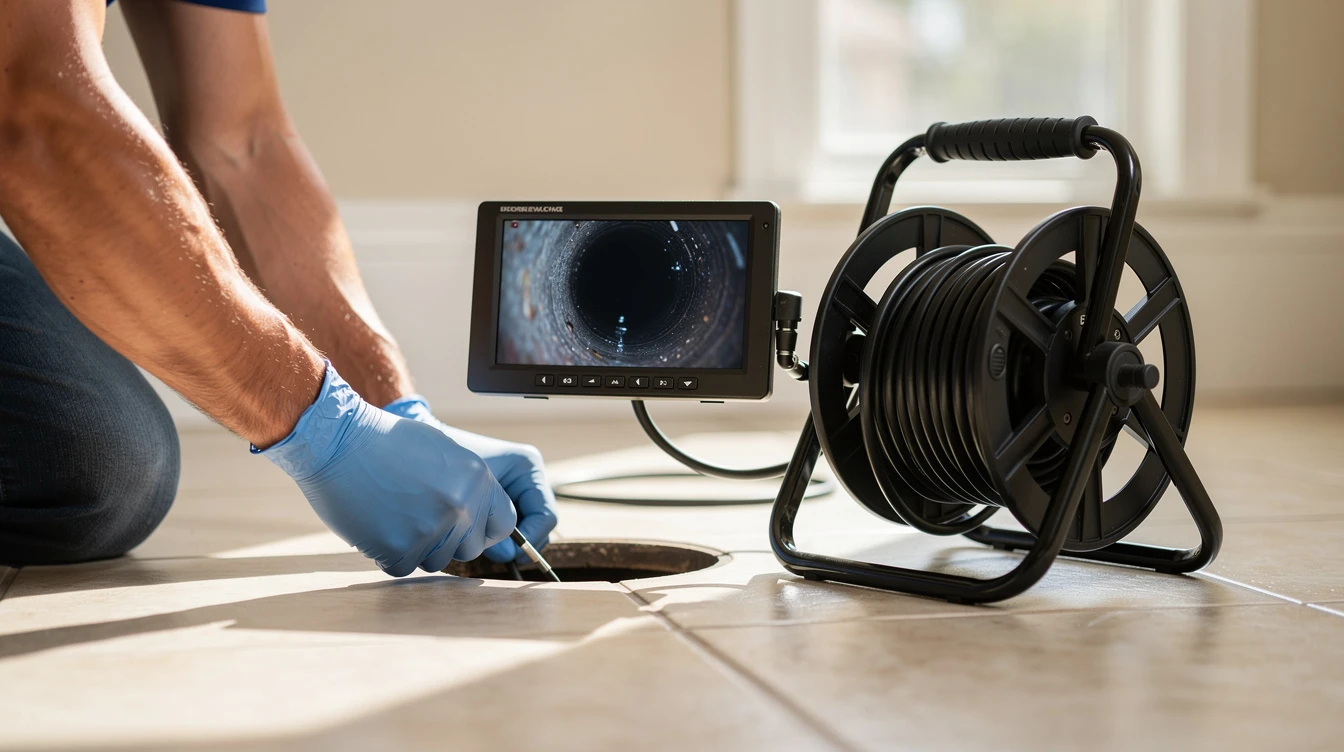
Walk your floors without shoes on. A spot that feels noticeably warmer than the rest usually means hot water is escaping from a slab line right below it. That warmth radiating up through concrete is one of the clearest slab-leak indicators there is, and it's something acoustic and infrared tools confirm in minutes.
Why you shouldn't guess at the source
Slab pipes are buried, so there's no easy way to eyeball the problem. Professional detection narrows the leak to a small, specific area, which means the repair opens one section of floor instead of the whole room.
4. Musty smells or mold that keeps coming back
Trapped moisture behind a wall or under flooring is exactly what mold needs to thrive. A closet, bathroom, or hallway that develops a persistent musty odor, or discoloration on drywall and baseboards that returns after cleaning, points to an ongoing water source hiding nearby. In our climate, that growth can establish itself within days, not weeks.
If you wipe a stain away and it reappears within a day or two, treat it as an active leak until proven otherwise.
5. Water pressure that's quietly dropping
Every gallon lost to a hidden leak is a gallon that never makes it to your shower head or kitchen faucet. If pressure has weakened gradually across the house, not just at one fixture with a clogged aerator, a leaking supply line upstream may be siphoning off pressure before it reaches you.
6. A hissing or trickling sound with nothing turned on
Stand quietly in the house at night and listen. A faint hiss or steady trickle coming from behind a wall, under a cabinet, or beneath the floor is often the sound of pressurized water finding a way out. It's subtle enough that most homeowners dismiss it, but it's exactly what our acoustic listening equipment is built to amplify and locate.
7. Baseboards, walls, or paint that start to fail
Moisture wicking up from a slab or seeping through a wall cavity softens whatever it touches. Watch for warped baseboards, bubbling or peeling paint, cracked drywall near the floor line, or a wall section that feels cool and spongy to the touch. Any of these can signal water intrusion that's been building for longer than it looks.
How we track down leaks without demolishing your home
The number one fear we hear on service calls is that finding a slab leak means jackhammering the whole floor. That's rarely how it works anymore. We locate leaks using two non-invasive methods.
Book a leak locate(754) 304-0006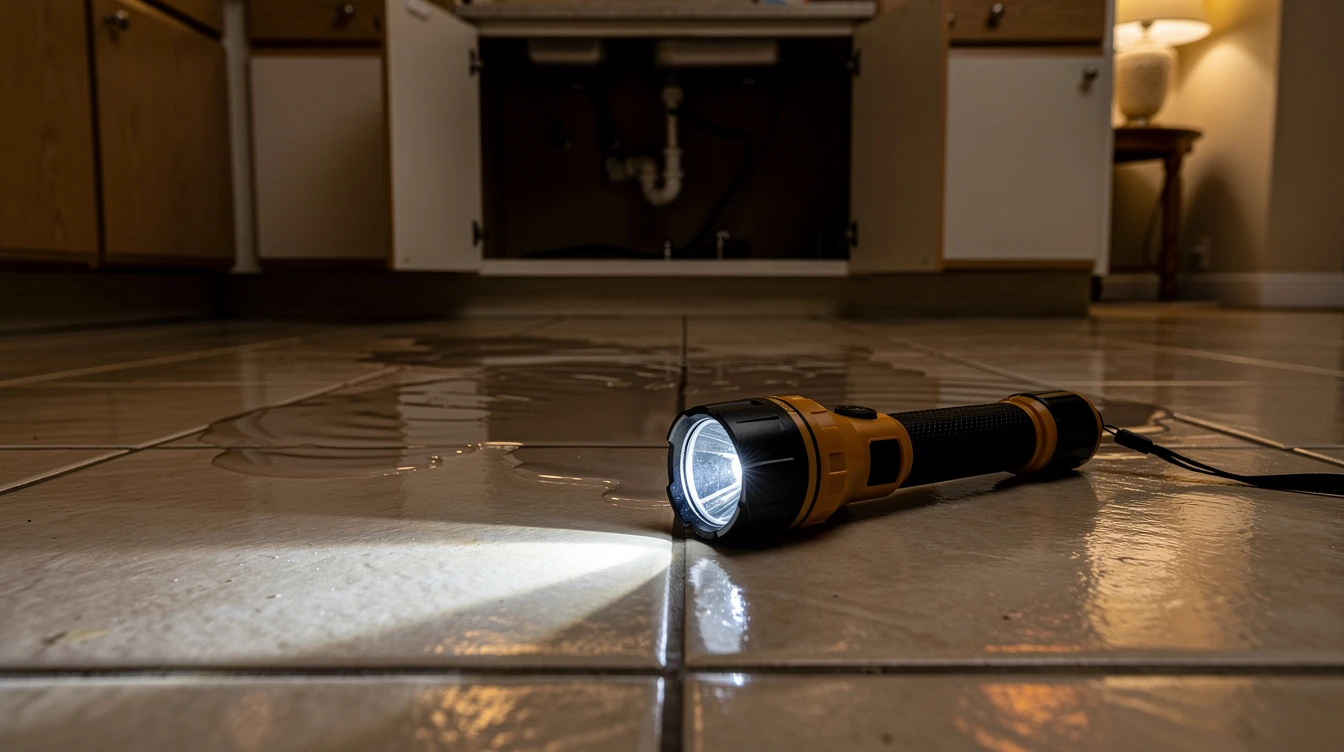
Acoustic listening equipment
Sensitive ground microphones pick up the specific sound signature of pressurized water escaping a pipe, even through several inches of concrete.
Thermal imaging cameras
Infrared readings expose temperature shifts caused by escaping hot water or spreading moisture, giving us a visual map of the leak's path before we open anything.
Used together, these methods let our technicians mark a target area often just a few inches across, so repairs stay small and focused instead of tearing through an entire room. Read more about our process on the leak detection page.
Repeat leaks usually mean it's time to talk repiping
One pinhole leak in copper piping can be a fluke. A second or third one within a year or two almost never is. Corrosion that produces one failure is typically active throughout the whole system, and patching leak after leak becomes an expensive habit. In those situations, whole-home repiping often costs less over time than chasing individual failures. We'll walk you through both options honestly.
Before assuming a hidden leak is to blame for a high bill, rule out a simpler culprit: a running toilet can waste nearly as much water. Our guide on diagnosing a toilet leak covers the quick tests to try first.
Notice any of these signs? Call (754) 304-0006 and we'll get a technician out to pinpoint it fast.
More from our plumbing library
Practical guides for homeowners across Cooper City and beyond.
Browse the full plumbing blog
Guides, checklists, and troubleshooting advice on every major plumbing topic.
All articles →Diagnosing a running or leaking toilet
A worn flapper can quietly waste hundreds of gallons a month. Here's the fix.
Related guide →Slab and pipe leak detection
Acoustic and thermal tools that find the leak's exact location without guesswork.
Service →Whole-home repiping options
Stop chasing pinhole leaks one at a time by replacing aging supply lines for good.
Service →Suspect a hidden leak? Get it pinpointed today.
A warm patch on the tile, a meter that never stops turning, a bill that climbed for no reason. Tell us what you're seeing and we'll send a technician with the listening gear.
Call now · 24/7(754) 304-0006Licensed & insured · FL CFC1433655 · Cooper City Emergency Plumbing SFL, 4491 S State Road 7, Davie, FL 33314 · Water actively flooding? Skip the form and call.