

What Really Sets Water Heater Replacement Cost in South Florida
Two homes can buy the identical tank and still land on very different invoices. Access, code compliance, and what's already behind the wall decide the gap. Here's how a Cooper City quote actually gets built.
Five homeowners, five different numbers
Ask five different homeowners in Cooper City what they paid for a new water heater and you'll get five different numbers, even for the same brand and size. That's not random overcharging. A quote is really a stack of separate decisions: the equipment, what code demands, and how hard the unit is to reach. Once you know what each layer costs, a quote stops feeling like a mystery.
This guide walks through the pieces that shift the total, points out when a repair beats a full swap, and covers the local wear-and-tear that shortens tank life here compared to cooler, softer-water climates.
Piece one: the tank itself
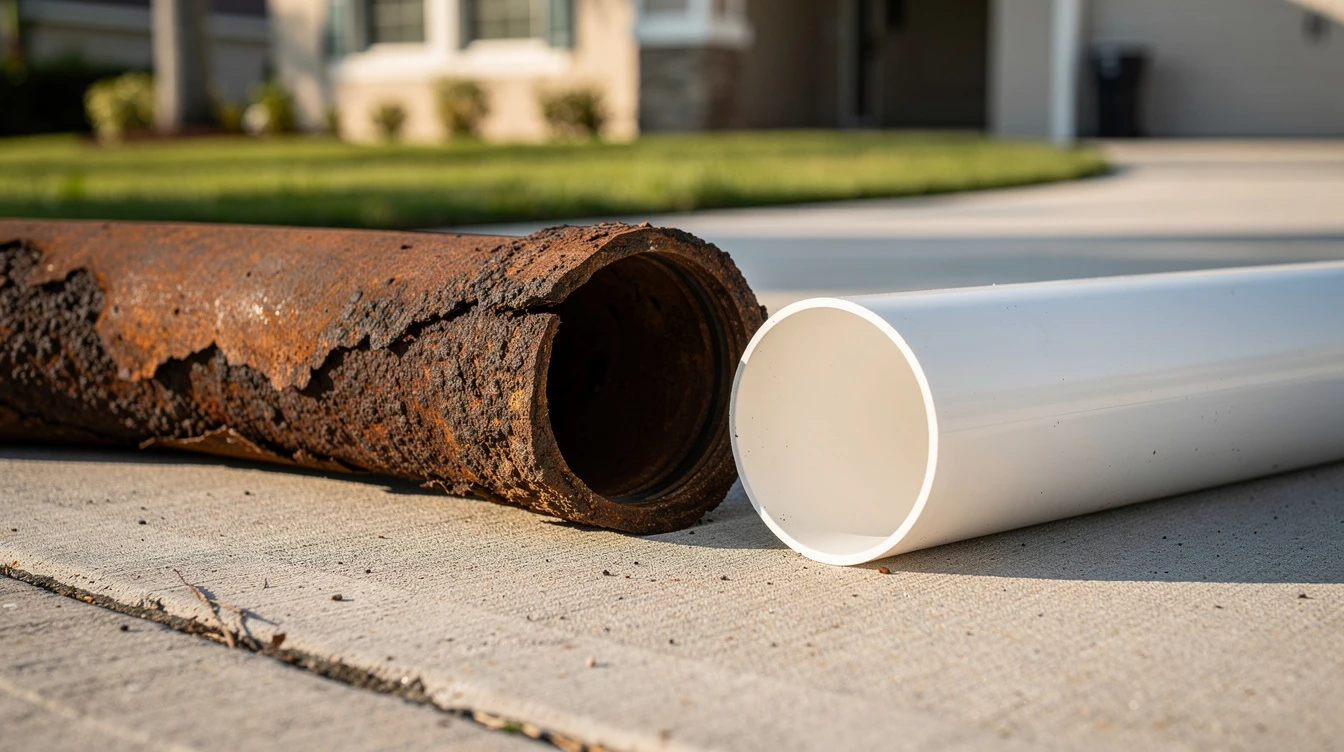
Size and fuel source set the floor. Moving from a 40-gallon to a 50-gallon electric tank is a small jump on paper. It gets more expensive when the larger unit needs a heavier breaker or a bigger supply line to keep up. The tank is rarely where the real cost surprise hides.
Standard tank or tankless unit
A tankless system costs noticeably more than a standard tank, and the equipment price is only part of it. Switching from tank to tankless often means running new venting, upsizing the gas line, and sometimes adding a dedicated circuit for the unit's electronics. Households that make the switch usually do it for the smaller footprint and steady hot water, but the supporting work is the real budget line, not the box on the shelf.
A quick way to gauge cost
Replacing what's there, same fuel, same spot, is the cheapest job on the list. Every change you add on top, a bigger tank, a different fuel, a new location, adds its own labor and materials.
Piece two: what Florida code requires
This is the section most homeowners skip past, and it's where a properly licensed install and a bargain-bin install diverge. A code-compliant water heater in South Florida isn't just the tank strapped into place. It includes:
A catch pan beneath the tank, drained to an approved point outside.
A relief valve discharge line piped correctly, not just left hanging.
An expansion tank on any closed-loop plumbing setup.
Hurricane strapping so the tank stays anchored in a storm.
Dielectric fittings and shutoffs installed the right way.
Skip any of these and the job may still run, but it won't pass inspection, and it could void a homeowner's insurance claim later. When a quote from a licensed plumber looks higher than a handyman's, this list is usually the reason. It's the difference between an installation and a shortcut.
Piece three: getting to the tank
Labor cost tracks with access. A garage floor install is the easy scenario, plenty of room, easy haul-out. A closet tucked into a hallway takes more care fitting the pan and lines into a tight footprint. An attic unit is the toughest job on the list: cramped, hot, and every piece has to be carried up and set in place by hand. That extra time is reflected in the final number, not padded onto it.
Piece four: permits, inspection, and hauling off the old tank
Most cities around Cooper City require a permit and a follow-up inspection on a water heater swap, confirming the code items above were actually done. That paperwork protects you if you ever file an insurance claim or sell the house. Removing and disposing of the old tank is a smaller cost, but it's still real. A trustworthy quote includes both up front instead of tacking them on after the work is done.
Should you repair it or replace it?
Not every failed water heater needs to be hauled to the curb. Age and symptoms tell you which path makes sense.
Repair makes sense here
If the tank is younger than six years and the tank itself is sound, a dead heating element, a faulty thermostat, or a stuck relief valve is often a quick, inexpensive fix. Before assuming you need a whole new unit, get a proper water heater repair diagnosis first.
Replacement makes sense here
Past the ten-year mark, the calculation changes. Rust-colored water, a rumbling sound from sediment buildup, or dampness pooling near the base all point to a tank on its way out. If you notice moisture around the unit, review the signs of a water leak before it spreads to the drywall. Once a tank starts leaking, patch jobs rarely hold, and a water heater replacement becomes the practical choice.
Why local tanks age faster
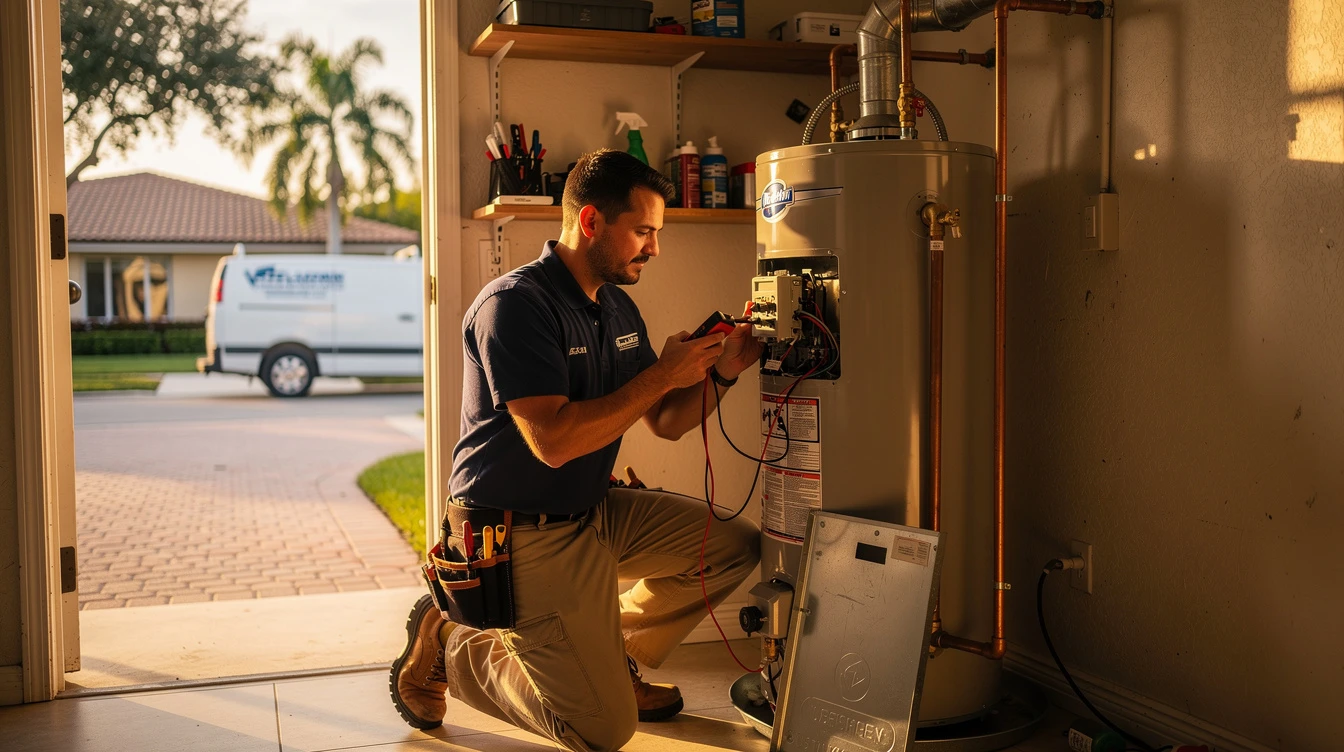
South Florida's hard water leaves mineral buildup coating the tank walls and heating elements. That layer traps heat inside the tank, forcing it to run longer to reach temperature, and it wears the metal down from within. It's a quiet cost driver, but over several years it can shave real time off a tank's expected life.
How to read your quote like a pro
A trustworthy estimate breaks out the unit, the code items, the labor tied to your access point, and the permit and disposal fees. If a competing bid comes in noticeably lower, ask what's missing. Nine times out of ten it's the pan, the expansion tank, or the permit fee, and those aren't optional add-ons. They're part of doing the job right.
Every house behind every quote is a little different, so the only number that matters is one built around your actual tank, your fuel source, and where it sits in your home. Call Cooper City Emergency Plumbing SFL at (754) 304-0006 and we'll walk your setup with you before any work starts.
More straight-talk guides
More straight-talk guides so you know what to expect before a small plumbing issue turns into a costly one.
All plumbing guides
Browse every homeowner guide we've written on repairs, replacements, and local code requirements.
Full library →Water heater repair
Bad elements, faulty thermostats, and stuck valves: the fixes worth trying before you replace a unit.
Try this first →Water heater replacement
What a code-compliant, fully permitted replacement includes, and why it costs what it does.
Full swap →Water leak warning signs
A damp base near the tank is one clue among several. Learn the full list before damage spreads.
Catch it early →Get a clear number for your water heater
Tell us the age, the fuel, and where the unit sits, and we'll walk your setup with you before any work starts. Permit, pan, and haul-away included in the number you approve.
Call now · 24/7(754) 304-0006Licensed & insured · FL CFC1433655 · Cooper City Emergency Plumbing SFL, 4491 S State Road 7, Davie, FL 33314 · Water actively flooding? Skip the form and call.